
Real Gran Turismo 7 laps put against a faster reference lap in Traces, corner by corner: the braking, the apex speed, the throttle and the line. Where the time goes, why it goes there, and what to fix first.
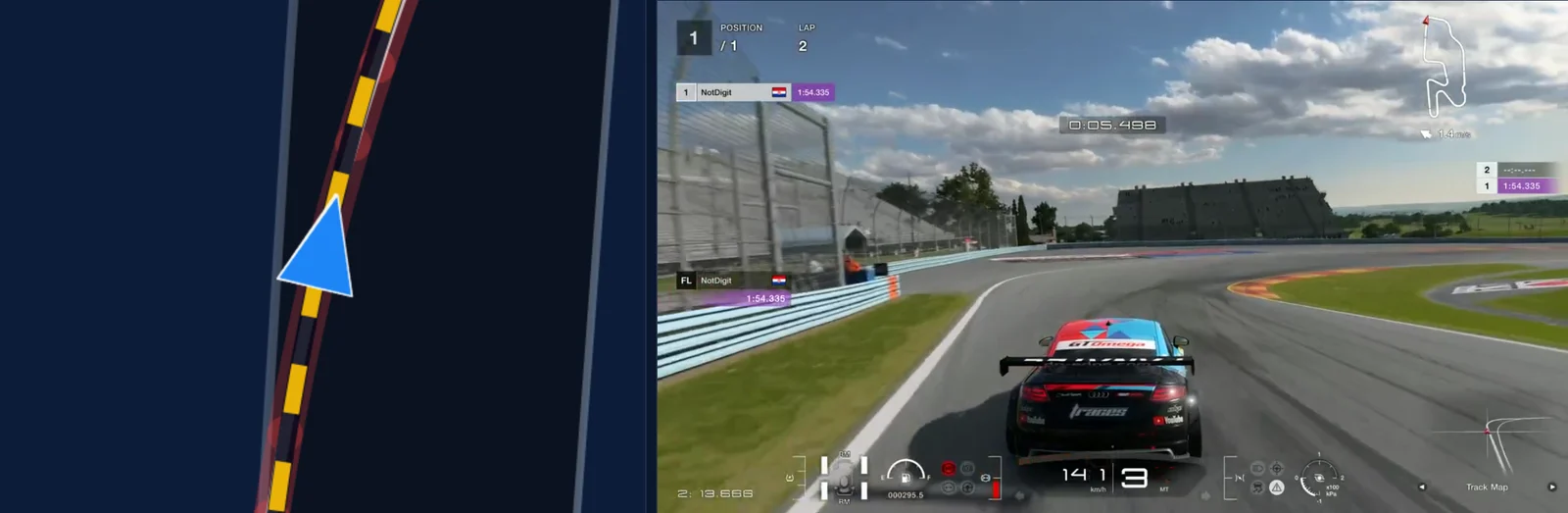 Lap Analysis
TCR_Bob126's brake points are within 3 m of the reference's at five of the seven stops. The time goes in what happens next: the car is slowed harder in the first part of the stop, then the brake comes off and goes back on, so most corners have a slower apex.
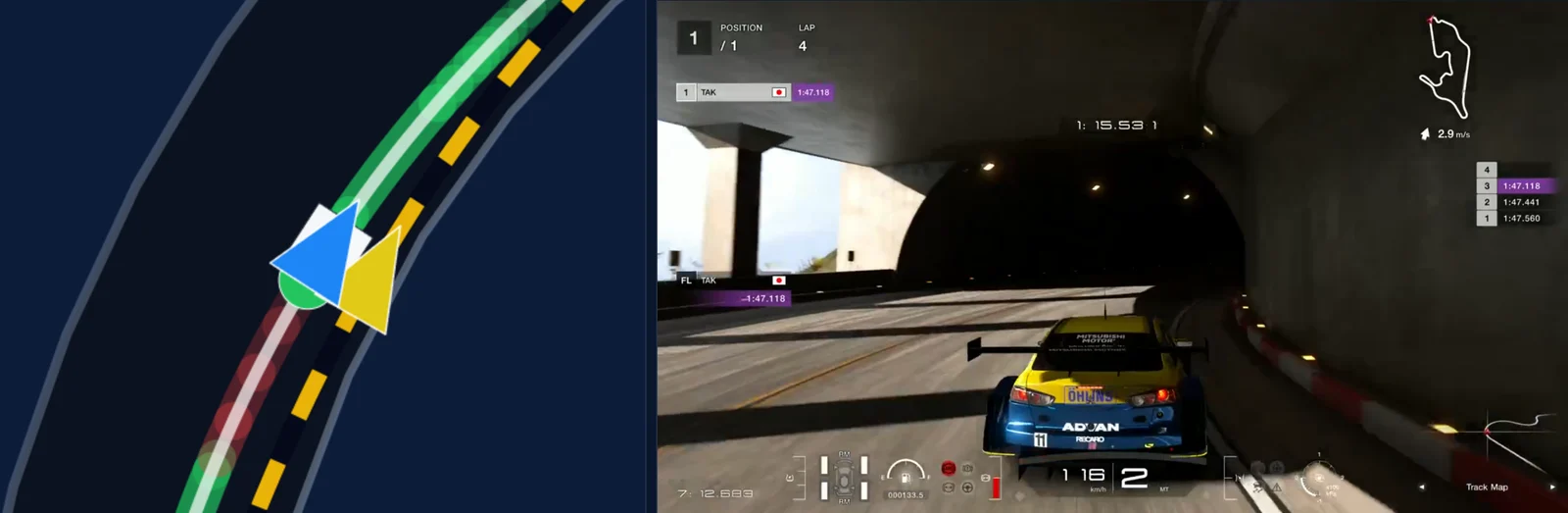 Lap Analysis
Garry Jarman's brake points are within 10 m of the reference's at every stop. The time goes in the middle of the braking: at the same metre the car is already much slower, so the slowest point comes early, and the earlier throttle only wins part of it back.
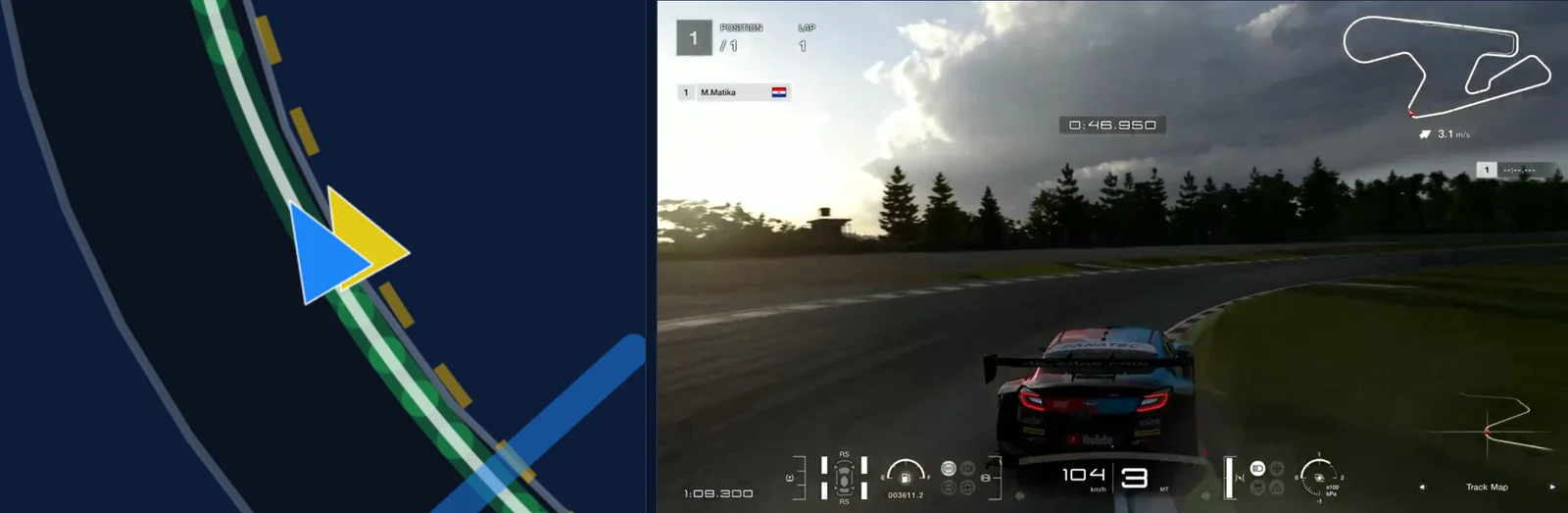 Lap Analysis
Simon C's brake points are within 3 m of the reference's at every stop. The time goes after the apex: the throttle comes back later, stops short of full, or lifts again, and in turns 4 and 6 the car is slowed more than it needs.
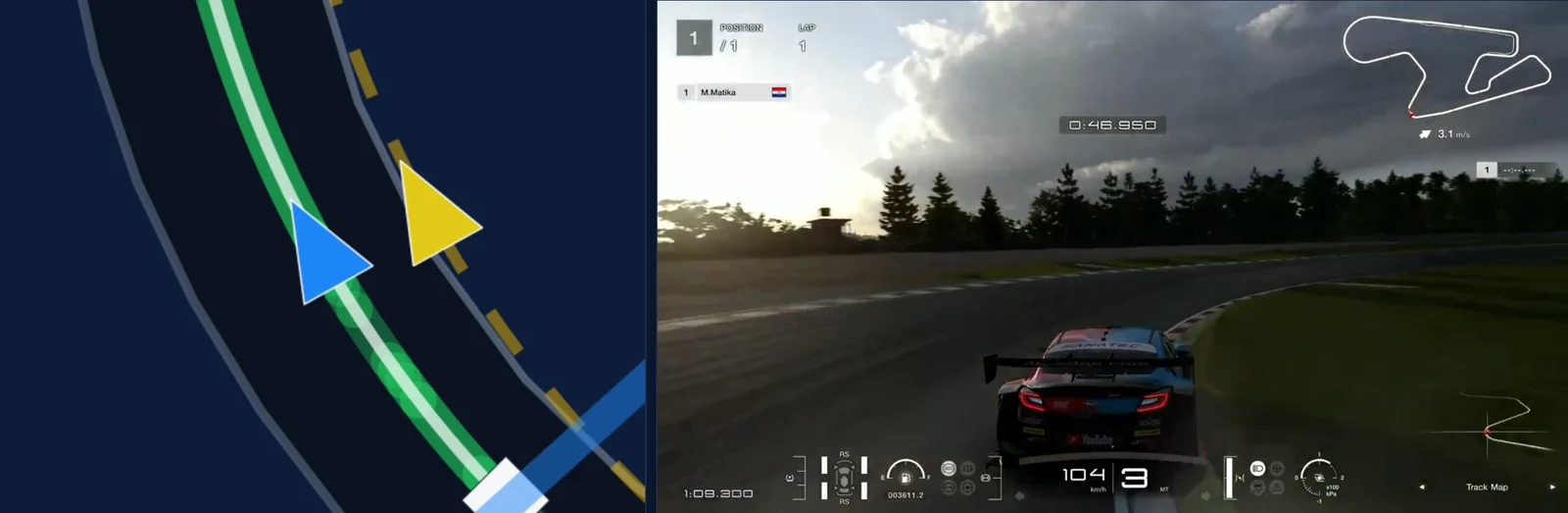 Lap Analysis
The brake points are within a few metres of the reference's. The time goes in how the brake builds, in a gear too high in turns 1 and 7, and in the lifts where the reference stays flat.
 Lap Analysis
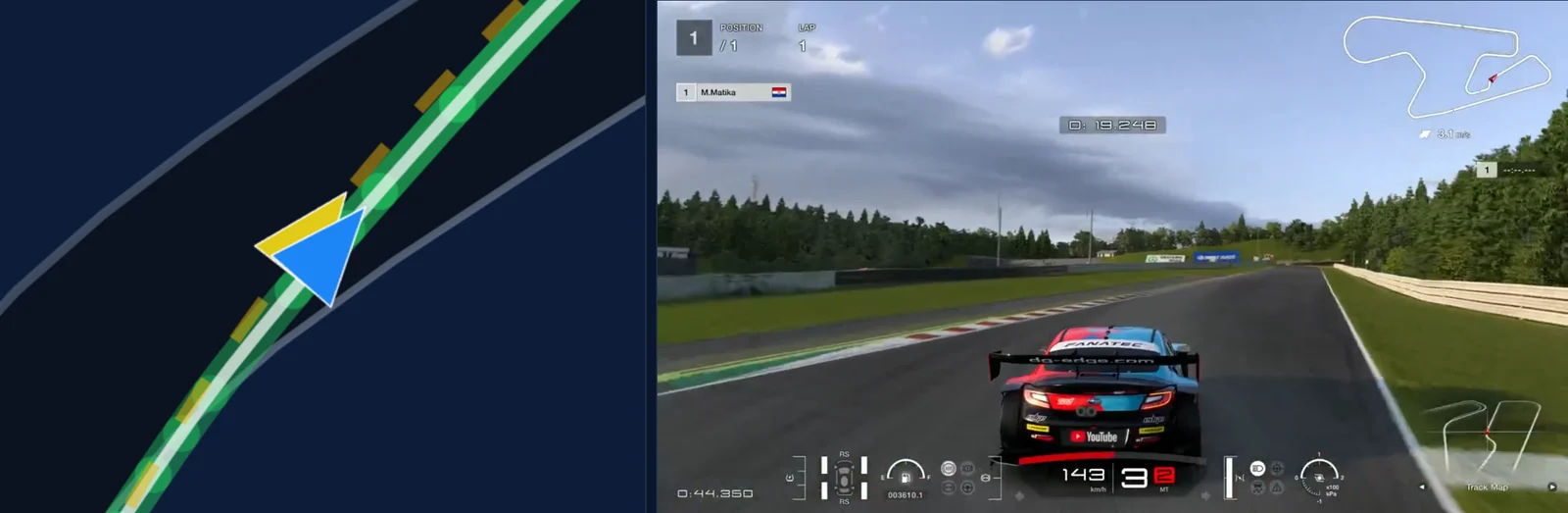
The brake points are close. The time goes after them: too much speed into the corner, the slowest point after the reference apex, and full throttle late.
 Lap Analysis
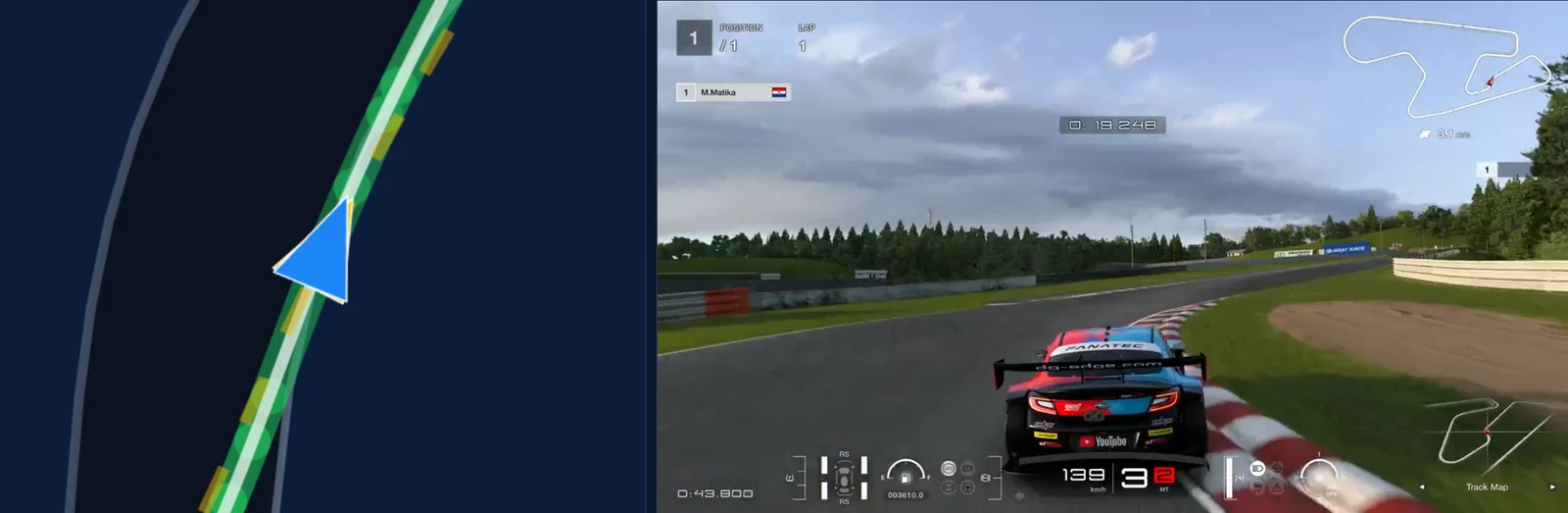
The brake points are close. The time goes after the brake: the throttle isn't at 100% straight away, and in the fast corners there is braking where a lift is enough.
 Lap Analysis
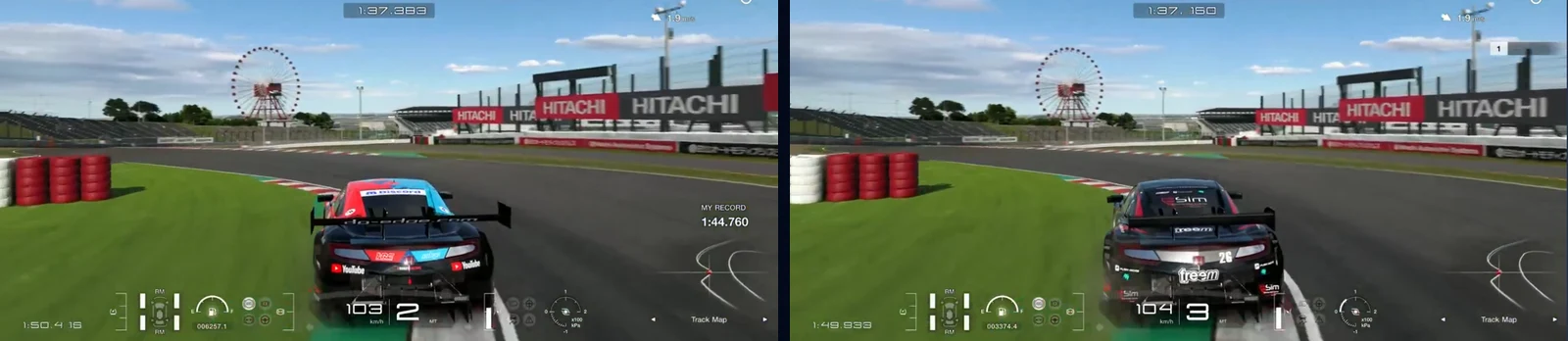
None of the losses is a brake point: the Esses, Degner, and the Casio Triangle exit a gear too low.
 Lap Analysis
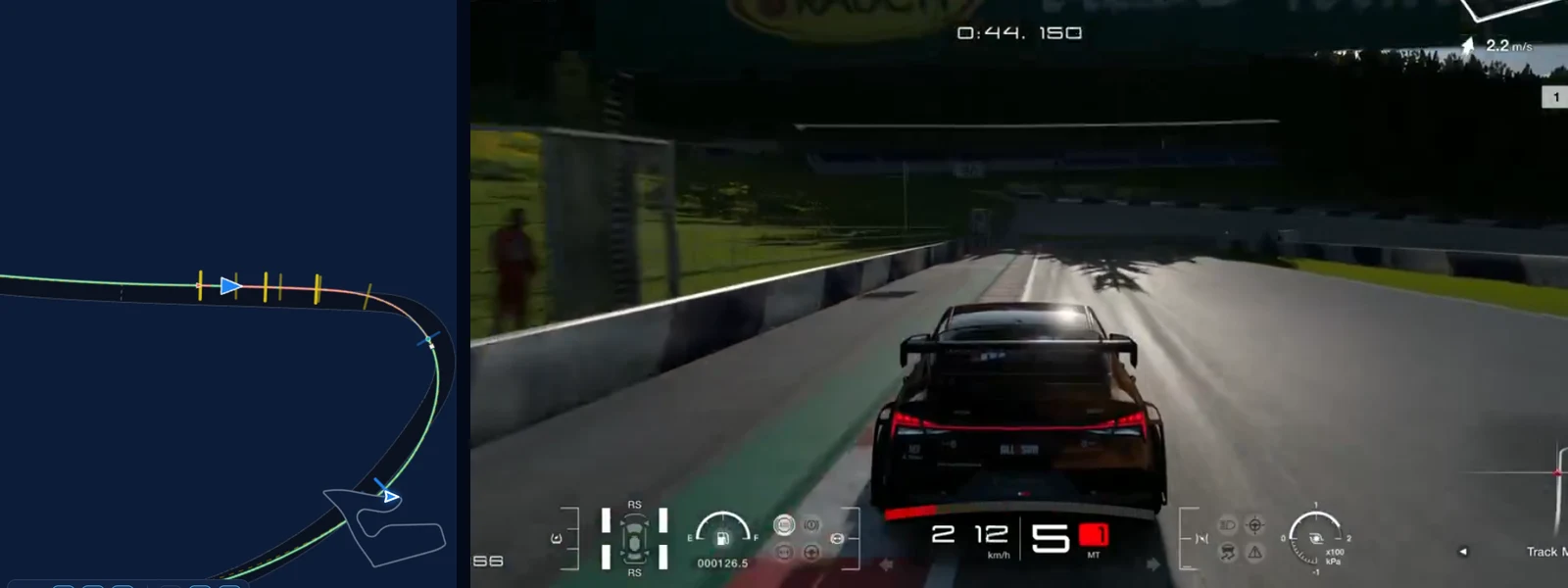
The brake points are close; the time goes in the first 30 metres of each stop.
 Lap Analysis
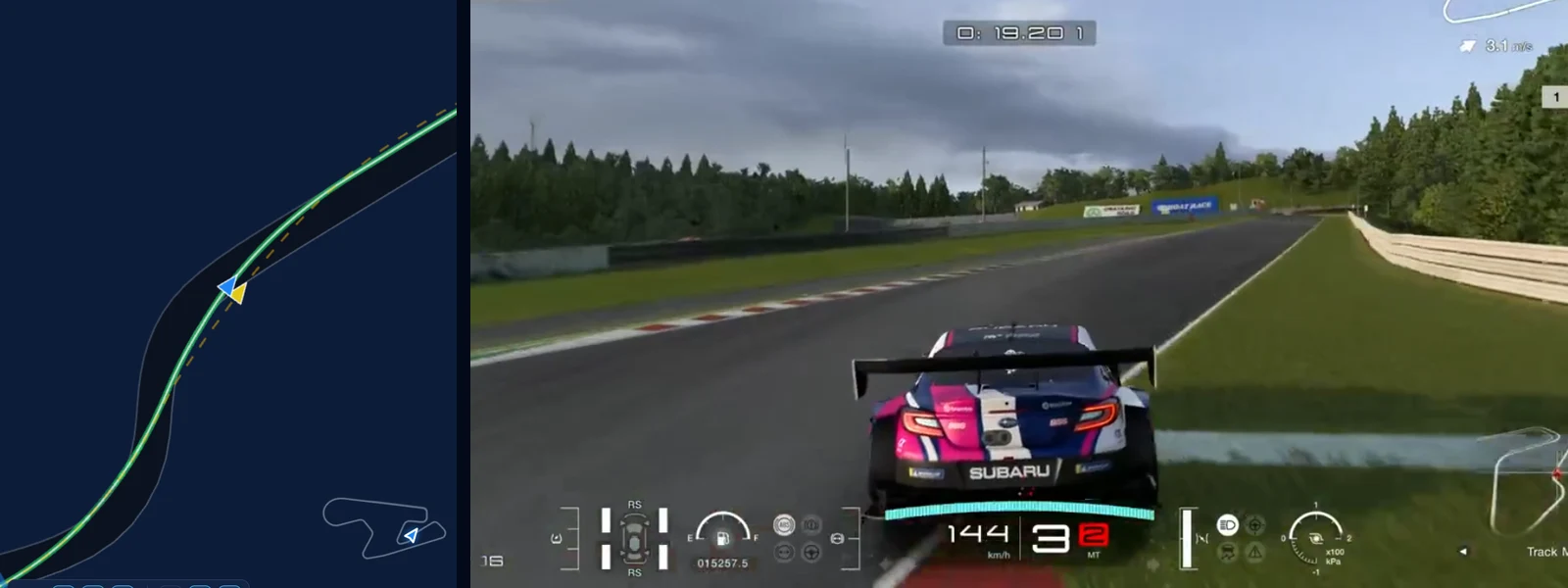
The brake points are within a few metres. The biggest loss is on full throttle, in a slide out of the hairpin.